Remedies for Driving Keys
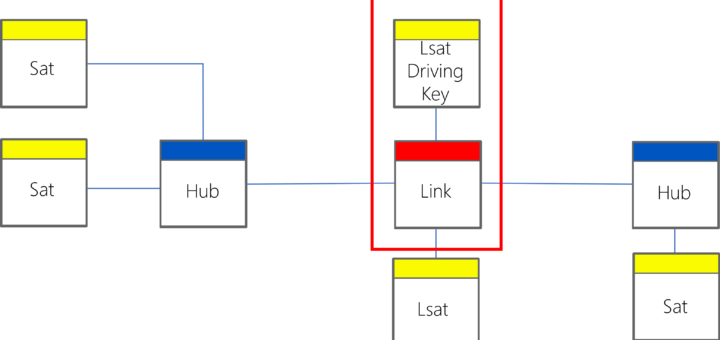
Driving keys continue to cause problems, even for experienced Data Vault practitioners. Are there better ways to manage relationship validity?

Data solution design patterns, implementation, and automation
Driving keys continue to cause problems, even for experienced Data Vault practitioners. Are there better ways to manage relationship validity?
End dating Satellites in Data Vault has much more than meets the eye. This post lays out various options and consideration that may help decide whether to implement end-dating, or not.
By plotting, and then combining, bitemporal and historised data sets on a cartesian plane it’s really easy to understand bitemporal behaviour.
Data Vault / ETL / General
by Roelant Vos · Published February 5, 2023 · Last modified February 7, 2023
When preparing Data Vault content for consumption in a dimensional model, dimension keys can be created to join the resulting fact- and dimension tables in a performant way. But what about for a truly virtual data mart? This post covers approaches to issue dimension keys that are fully deterministic.
To facilitate ongoing research in tweaking Data Vault patterns for various use-cases, I recently updated the open source data warehouse automation environments TEAM (source-to-target mapping management) and Virtual Data Warehouse (code generation). These updated versions make playing around with patterns even easier. If you’re interested in having a look at how different patterns work, or what it would mean to deploy a fully virtual data warehouse – have a look at the provided examples. With...
Automation / Data Vault / ETL
by Roelant Vos · Published November 28, 2021 · Last modified November 11, 2024
This post shows how to configure an Azure DevOps pipeline to generate code using the schema for Data Warehouse Automation.
This latest version of the Virtual Data Warehouse requires no database, and comes with Data Vault examples to generate code straight away.
Example code for creating a Confluent Kafka consumer using the .Net libraries.
Creating a Kafka producer for data warehouse automation metadata in C#.
This new entry in the ‘simple ETL generation series‘ leaves the Data Vault Hub concepts behind. Much of the logic shared in earlier Hub ETL generation posts will be reused for the purpose of generating a new type of ETL process: loading a Data Vault Satellite table. In Data Vault, a Satellite provides context for the Core Business Concept (CBC) – embodied by the Hub and its Business Key. Or simply put: a Satellite contains...
More
Moving to Europe (The Netherlands) - July 17th, 2025